


From hydrocarbons to hydrogen and carbon

Three tde initiatives carry our gas expertise into a second energy chain: transforming natural gas into hydrogen as a scalable, low-cost and sustainable energy carrier, and turning the solid carbon that comes with it into a secondary raw material for energy storage and agricultural applications.

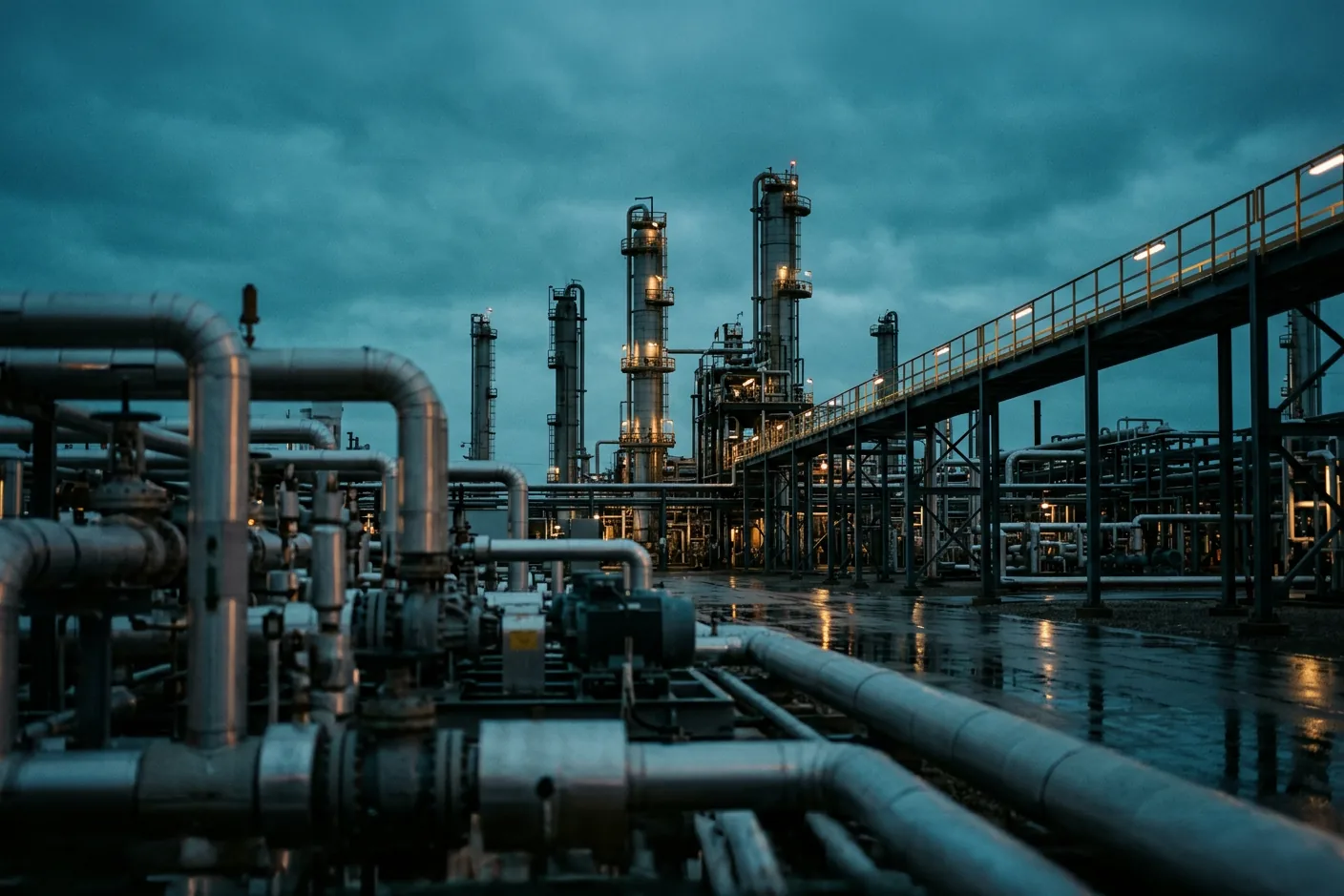
A gas processing plant at dusk: insulated pipework and valve manifolds in the foreground, distillation columns and a lit pipe rack behind, reflected in wet ground.

The business we run today is the infrastructure hydrogen needs

This is not a separate venture bolted onto the company. The route from gas to hydrogen runs through gas fields, pipelines and storage facilities — the assets we already operate, and the discipline we already apply to them. Existing gas pipelines and storage facilities can be used to produce and transport hydrogen on demand, which is why an operator of mature gas assets is well placed to build the supply chain that follows them. The same logic extends our reservoir work, which already reaches into gas, CO₂ and hydrogen storage.

One process, two products

Methane from natural gas or biogas is split into hydrogen and solid carbon. The hydrogen is the energy carrier; the carbon is not waste to be disposed of but a raw material — and one of its uses is storing the hydrogen it came with, which is what closes the loop.

That second product is what separates this route from carbon capture. Nothing is captured and buried here: the carbon leaves the process as a solid, and the question is what to build with it.

natural gas or biogas plasma or pyrolysis hydrogen solid carbon carbon-based hydrogen storage

Three initiatives

  • tde hydrogen

    Plasma or pyrolysis · existing gas infrastructure

    An initiative focused on producing hydrogen and carbon without CO₂ emissions from natural- or biogas via plasma- or pyrolysis, utilizing only 20% of the energy compared to electrolysis. We can use existing gas pipelines and storage facilities to produce and transport hydrogen on demand. An additional benefit is the creation of carbon credits as a result of the zero emissions process.

  • tde hydrogen storage

    Decentralized systems · large, medium and small

    An initiative proposing the use of solid carbon to create organic carbon-based hydrogen storage for decentralized systems at different scales. It is an advanced storage solution based on porous carbon using moderate pressure and temperatures — safe, low-cost and environmentally friendly. It can be used to power heavy machinery in remote applications across oil, gas, construction, shipping and mining, delivered via a standard container to power dual fuel or hydrogen combustion engines.

  • tde carbon

    Soil quality · water use · food security

    An initiative focused on the benefits of solid organic carbon to enhance soil quality, reduce water consumption in agricultural applications, and address global food security challenges. Other applications include additives for construction and advanced materials such as hydrogen storage and filtration.

The second product, up close

Solid carbon leaves the process as a dry, handleable material rather than a gas to be captured and buried. What it becomes next — a soil amendment, a filtration medium, a storage matrix — is the question the carbon initiative exists to answer.

Fine black carbon powder heaped in a shallow white dish on a pale worktop, with laboratory glassware out of focus behind it. A pair of soil-covered hands cupping dark topsoil mixed through with coarse black carbon granules, a planted bed blurred behind.

Why this matters now

A committed project pipeline

More than 570 committed clean-hydrogen projects and USD 130 billion of committed investment, representing 6.9 Mtpa of committed capacity — with 90% of those projects under construction or operational. Hydrogen Council, Global Hydrogen Compass 2026.

Policy behind the shift

Low-emissions hydrogen is now treated as an energy-security question, with more than 1,000 supporting policies announced or implemented since 2020. IEA, Global Hydrogen Review 2026.

Demand that already exists

Hydrogen demand remains concentrated in established industrial uses such as refining and ammonia — real offtake today, before any new market is built. IEA, Global Hydrogen Review 2026.

The molecules do not stop at hydrocarbons. Neither do we.

talk to us about your fields